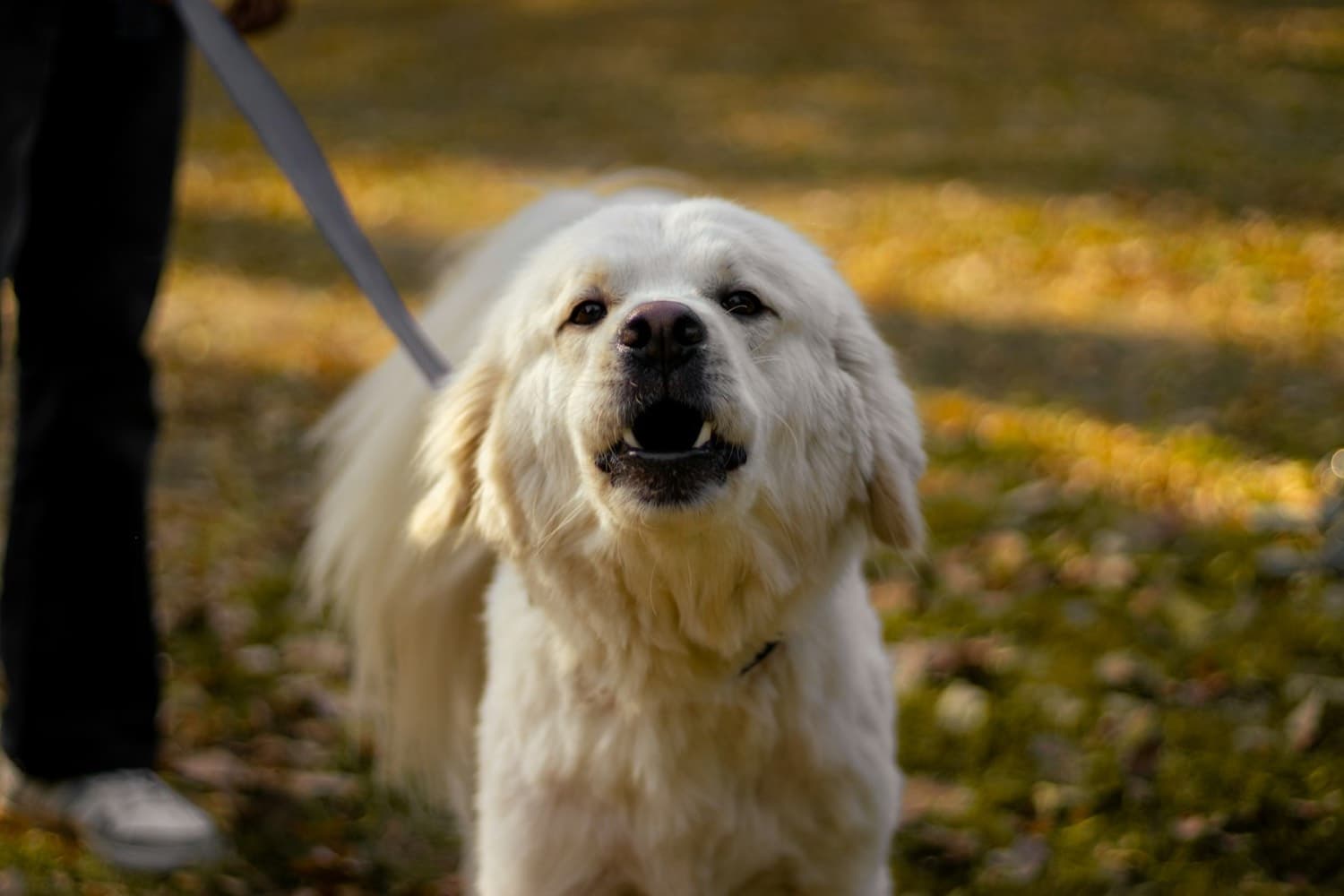
Does having a dog make you safer around bears in Alaska?
Only if the dog is under control. The Alaska Department of Fish and Game says dogs do repel animals, but also that bears feel threatened by dogs and mother bears are especially attuned to them, and that an uncontrolled dog can agitate a bear and then flee back to its owner, bringing the bear with it. Control is the whole variable.
Two things are said constantly in Southcentral Alaska and they contradict each other. One is that a dog keeps bears away. The other is that a dog is the fastest way to get charged. Both come from real experience, and the reason they coexist is that they describe two different dogs.
The state's own writing on this is more useful than either piece of folklore, so here it is, with what it means for training.
What ADF&G actually says
On the deterrent side, the department is clear that dogs do repel animals, through all the activity, the bounding through the underbrush, and especially their scent.
On the risk side it is equally clear. Bears really notice dogs, barking or not, the bears feel threatened by the dogs, and mother bears are especially attuned to dogs. Bears have been observed focusing on the direction of a dog in a parking lot purely on scent.
And the failure mode is specific: an uncontrolled dog could agitate a bear by challenging or attacking and then fleeing back to you, bringing the bear with it. The department also notes the outcome depends on variables including the size, age and behavior of the dog, whether it is restrained, and whether the bear has cubs.
Read those together and the picture is not ambiguous. A controlled dog is an early warning system and a deterrent. An uncontrolled dog is a bear delivery service that runs at you.
This is the same pattern as moose, which should tell you something
ADF&G describes an almost identical dynamic with moose: they act out defensively when they encounter loose dogs, and retreating dogs have been known to draw an angry moose back to the owner.
Two different species, the same mechanism. The dog goes out, provokes, loses its nerve, and comes home with the problem. That is not a bear problem or a moose problem. It is a recall problem, and it is the single most consequential thing you can train in this state.
Where this is already a rule rather than advice
Land managers here already close ground over it. At the Eagle River Nature Center in Chugach State Park, the Albert Loop is typically closed between August and November because of bear activity, and dogs must be on a leash on the Rodak and Albert Loops and in the parking lot regardless.
Far North Bicentennial Park in Anchorage, which contains the North Gasline Trail off leash corridor, is genuine bear as well as moose country. So the one place in the city where your dog may legally run loose on a trail is also a place where the state's own advice about loose dogs applies with full force.
Elsewhere in the state park system the standard on trails is under control rather than leashed, under 11 AAC 12.130. Under control is a legal standard and not a courtesy. A dog that will not disengage from a scent at 60 yards does not meet it.
What to train for this specifically
A recall that works against a live scent, not a thrown ball. Those are different skills. Most dogs that recall beautifully in a park will not turn away from something biological and interesting, and that is the only version that matters here.
An emergency stop. A dog that can be stopped where it stands, at distance, gives you options a recall does not when the dog is already between you and the animal.
Disengagement on cue. The skill of breaking attention off something the dog has locked onto is the one that prevents the whole sequence from starting.
Leash manners good enough that a leash is not a punishment. If leashing your dog is the thing that ruins its walk, you will not do it when you should.
Brett builds all four in the places you actually walk, which in Southcentral Alaska means the leashed perimeter of real trails with real distractions rather than a quiet field. He will also tell you honestly when your dog has not earned the open ground yet, which is the part most owners are not told.