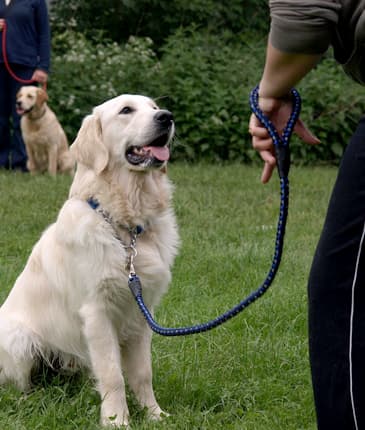
How does Brett approach dog training?
Brett uses a balanced approach built around clear communication, structure, leadership, and consistent practice. Rewards and any training equipment are selected for the individual dog and discussed with the owner. The first step is understanding the behavior, household, and training goals.
It is easy to get overwhelmed by labels when you are looking for help with your dog. What matters in a consultation is understanding what the trainer proposes, why it fits your situation, and what you will be expected to practice.
My work emphasizes structure, leadership, and clear communication. I want owners to understand the exercises rather than feel they have to copy a performance without knowing what the dog is learning.
Start with the situation you need to change
Describe what happens before, during, and after the behavior. Include your dog’s history, what you have tried, and any safety concerns. Puppy biting, distress when alone, and reactions to other dogs do not all call for the same plan.
A useful assessment considers your household and routine as well as the behavior itself. Be clear about the changes that would make daily life easier for you.
Ask how skills will be taught
Rewards can help a dog learn and practice useful behavior. Structure, predictable routines, and clear expectations help bring those skills into everyday situations. Ask the trainer how an exercise will be introduced and how difficulty will be increased.
If a particular collar or other training equipment is proposed, ask why it is appropriate, how it will be fitted, and how you will be coached in its use. Equipment does not replace instruction or careful handling.
Make room for observation and adjustment
A dog struggling to respond may need a simpler task, more distance, a different environment, or another way of explaining the exercise. The plan should allow the trainer to notice that and adjust.
Where there is fear, panic, or bite risk, begin with individual assessment and management. Do not arrange difficult encounters to test whether a method works.
Understand your role between sessions
Private training includes coaching you. Ask what to practice, how often to review it, and how to recognize when the next step is appropriate. A routine you understand and can repeat is more useful than a long list of commands.
Consistency matters, but questions are part of learning. Discuss what support is included and what to do if an exercise is confusing or your dog is not progressing.
Discuss the next step without a promise of instant results
Progress varies with the behavior, history, environment, and practice. Experience helps a trainer assess those factors; it does not make a fixed outcome or deadline appropriate for every dog.
For Anchorage and Mat-Su training, contact me to describe your dog’s needs and discuss current in-person or online options. The conversation should help you understand the starting point before choosing a program.